
Jadeite Investment: 20 Years of Auction Trends and Price Growth
Jadeite, especially high quality pieces from Myanmar, has become a global hard asset. Over the past 20 years, international auctions such as Sotheby’s, Christie’s, and Poly Auction have acted as the clearest indicator of its value. By looking at auction data, we can better understand how investment grade jadeite, premium jadeite, and collectible jadeite jewelry have evolved.
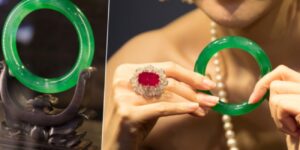
Jadeite Investment 20 Years of Auction Trends and Price Growth (1)
Four Phases of the Jadeite Auction Market (2005–2025)
1. Growth Phase (2005–2010)
As China’s wealth grew, demand for natural jadeite and luxury jade jewelry increased rapidly. In 2009, a jadeite bangle sold at Christie’s Hong Kong for HKD 15.68 million, setting a new benchmark. Prices for mid- to high-end jadeite rose by 20–40% annually.
2. Boom Phase (2011–2017)
This period saw record-breaking prices. In 2017, the “Hutton-Mdivani Jadeite Necklace” sold for HKD 72.62 million at Sotheby’s. In the same year, a full green jadeite bangle reached over HKD 500 million at Poly Auction. Imperial jade and top-tier pieces became global trophies.
3. Adjustment Phase (2018–2022)
The market became more rational. While top-quality jadeite remained strong, mid- and lower-tier pieces corrected by 20–30%. After COVID, online auctions increased, and buyer behavior became more selective.
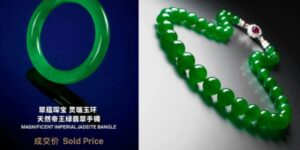
Jadeite Investment 20 Years of Auction Trends and Price Growth (5)
4. Divergence Phase (2023–2025)
The market split clearly. Top investment grade jadeite continued to rise, while lower-quality jade stagnated. In 2025, a jadeite bangle sold for RMB 280 million, showing that the best pieces are still in extreme demand.
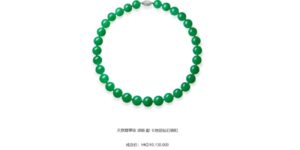
What Drives Auction Prices?
Auction results reveal clear patterns behind value:
-
Changing Preferences
- 2005–2015: Bangles and beads dominated the market
- 2016–2020: Cabochons (small but perfect pieces) became popular
- 2021–2025: Matching sets and collections gained attention
2. Global Buyers
Early buyers were mainly from Hong Kong and Taiwan. Today, collectors from Mainland China, Southeast Asia, Europe, and the US all participate. Institutional buyers such as family offices are also entering.
3. Key Value Factors
Collectors consistently focus on four elements:
- Texture (structure and transparency) – ~40% importance
- Color – ~40%
- Craftsmanship – ~10%
- Shape and size – ~10%
The highest premiums go to pieces that combine glassy texture, imperial color, large size, and no cracks.
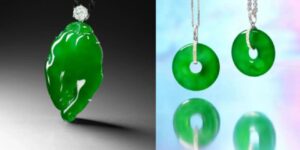
Iconic Auction Examples
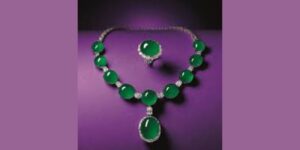
- 2017 – Hutton-Mdivani Necklace (Sotheby’s)
A historic jadeite bead necklace increased over 7 times in value since its earlier sale. - 2019 – Jadeite Cabochon Ring (Christie’s New York)
A top-quality cabochon reached HKD 32 million, showing growing global acceptance of real jadeite jewelry. - 2025 – Full Green Jadeite Bangle (Poly Auction)
Sold for RMB 280 million after intense bidding. Large size and flawless quality made it a strategic asset.
What This Means for Investors
The past 20 years show a clear trend:
- Top investment grade jadecontinues to rise
- Mid-level fine jadeitegrows steadily
- Low-end jade has little investment value
At Hermit Jade, we closely follow global auction results and market trends. Our experts continuously study price movements, collector behavior, and supply changes to guide our clients. We help collectors select collectible jade jewelry that align with long-term asset strategies.